Yurts and Tobias Fairlove

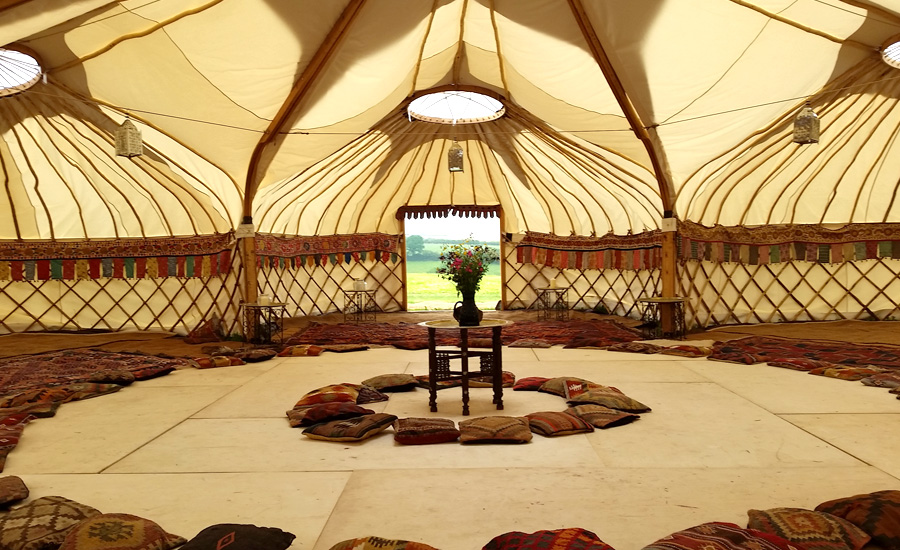
The Yurt(or Ger) home to the Nomads of Central Asia for over 1500 years, is without a doubt one of Asias finest creations. Entering a Yurt is like entering a Temple of the Earth, its simplicity and sacred proportions immediately transport you to another time and place. The stillness, the beauty, the warmth and the light all delight the body mind and spirit. It is as if the majesty and beauty of Nomadic life is encoded in the very structure of the Yurts themselves.

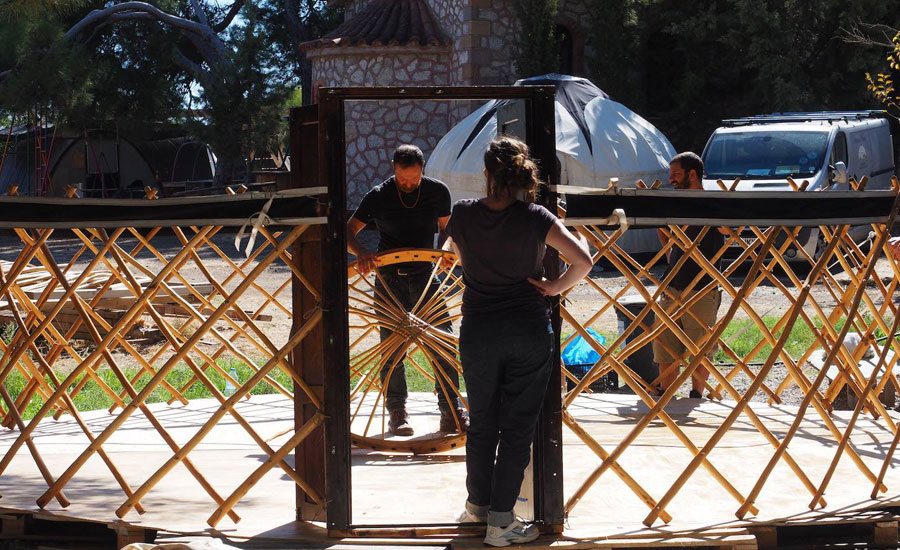
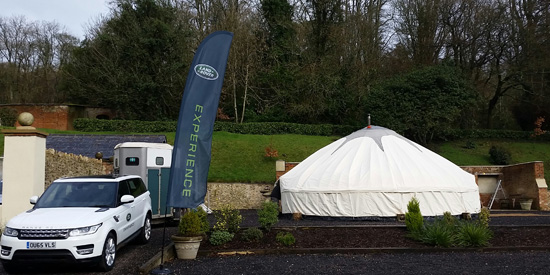
Tobias Fairlove & Sons pride themselves on the quality of the Yurts they make for you. Our Yurts are modelled on the Turkoman style, each one is made of coppiced Ash and Sweet Chestnut (occaisionally other hardwoods are used) all treated with natural preservatives. Each pole is hand crafted and the whole Yurt is unique - a careful balance of exactness of design and the organic naturalness of a handcrafted product made from greenwood.  The Yurts have beautifully fitted white canvas covers with contrasting black canvas roof caps. All  the canvas conforms to BS 5438/5867, 3408 and 2087 for fire, water and rot resistance.  We believe we make for you the best and most individual yurts available.

Customer care, we are very proud of our relationship with you our customers, if you are happy then we are happy.  Our attention to detail is second to none in the yurt world and we constantly strive to improve what we do.  In addition we have a comprehensive health and safety policy, full public and employers liability insurance, and we conform to the muta code of good practice wherever it is applicable to yurts.

This business is run with respect and appreciation for the Earth on which we all live and inparticular for the Nomadic Peoples of Central Asia.
A special thanks too, to Hal Wynne-Jones for his support and inspiration.

The Peoples of Central Asia and their Tents
The nomadic Turkic and Mongol tribes are primarily the yurt dwellers of this earth.  A few of the Persian speaking peoples also live in yurts, notably Tajiks in the Pamirs and Pashtus in the Badakshan and Wakhan areas of Afghanistan.  The Shasehvan (Ilsehvan) on the Azeri/Iranian border live in a hybrid of the yurt the Alachig.

The Mongols call their yurts Gers, these tents have straight roof ribs and usually have two central support poles supporting the roof wheel.  They are covered these days in quilted canvas and often have brightly painted wooden doors.  Mongolian Gers are found in present day Mongolia and Inner Mongolia (PRC).

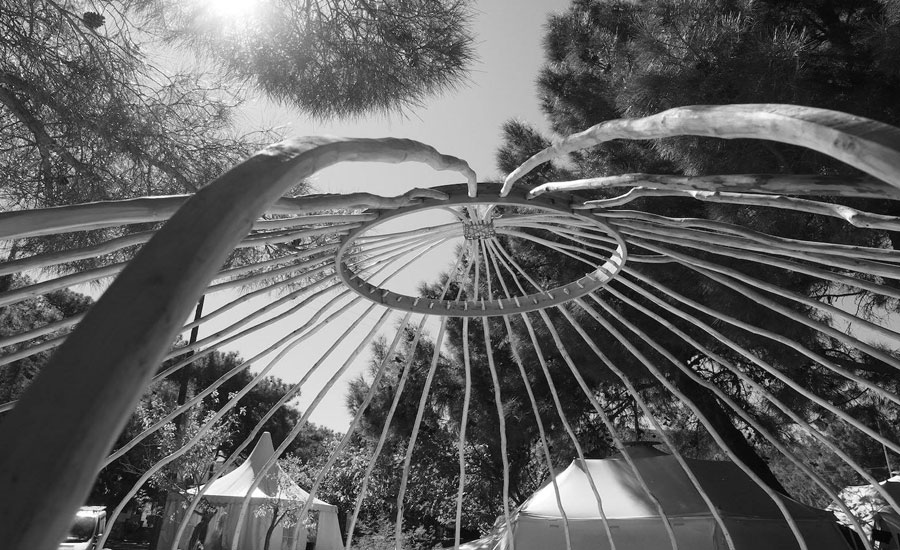
The Turkic peoples (Turkmen, Uzbek, Kyrgyz and Kazak) live in Turkoman style yurts known as bosuy or uy.  These tents have curved roof ribs (auk) which gives a more domed profile to the roofs and creates more head room inside the yurt.  The roof wheel (tunduk) is free standing, and they can be either covered in felts (alakiyiz), canvas and or reed screens (chiy).  The roof wheels vary in design from region to region as do the doors.  The intricately woven tent bands (terme) that support the structure (kerge/khana) and hold different parts of the frame in place vary in pattern from clan to clan.

We make our yurts locally in the Turkoman style from coppiced ash or sweet chestnut and thus have the traditional “vernacular” appearance.  The covers are made in the UK too from fire, rot and water proofed canvas and conform to the necessary British standards.  We import Kyrgyz felt hangings, for both inside and the outside of your yurt and woven tent bands for the inside (or for your house of-course).  These make what is already a beautiful structure into a stunning one.  You can either upgrade your existing yurt or add them to your new one.  We have a limited quantity in stock but we are happy to order what you want from Kyrgyzstan, please be patient on delivery times though.

HOME